
At 11:15 am on Sunday 3 September 1939, millions of Britons gathered around wireless sets to hear Prime Minister Neville Chamberlain announce that Britain was at war with Germany. Following Germany’s invasion of Poland, the nation was resigned to the fact that Hitler had to be stopped by force. The war had a profound effect on the everyday lives of ordinary people. The evacuation of women and children from major cities and industrial targets began immediately. A nighttime blackout was imposed on 1 September when Germany invaded Poland and bombed Warsaw.
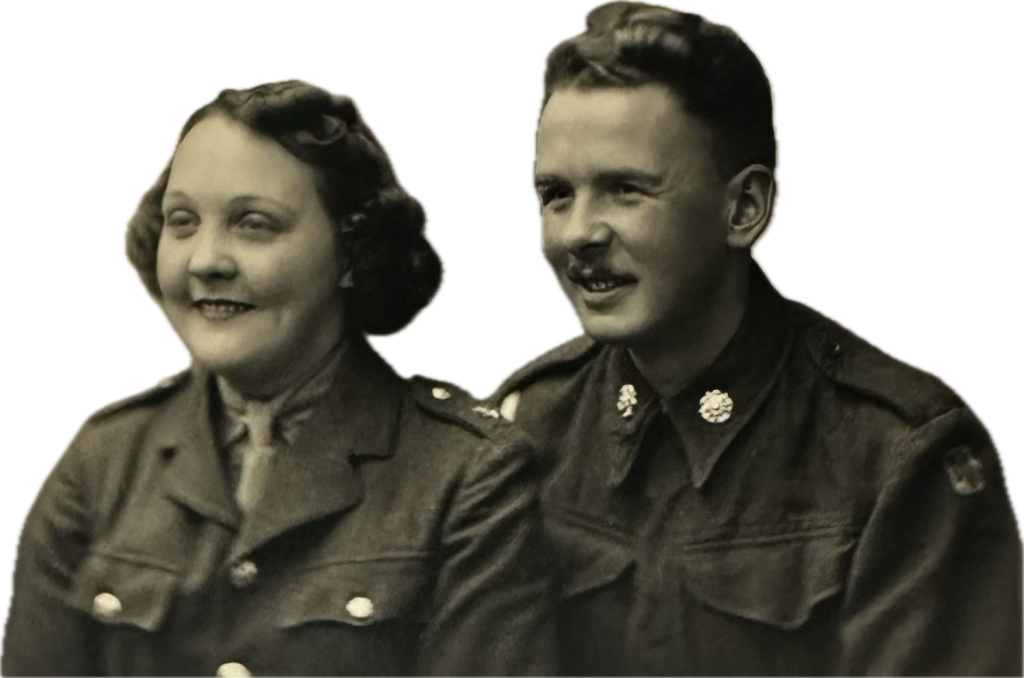
William Blaylock and Edith Mary Mason grew up as next-door neighbours on Northgate, Heptonstall. Both families were at the heart of village life. Edith’s father, Samuel, was Clerk to the Parish Council and William’s father, Elias, was a lay preacher and Superintendent of the Methodist Chapel Sunday School.
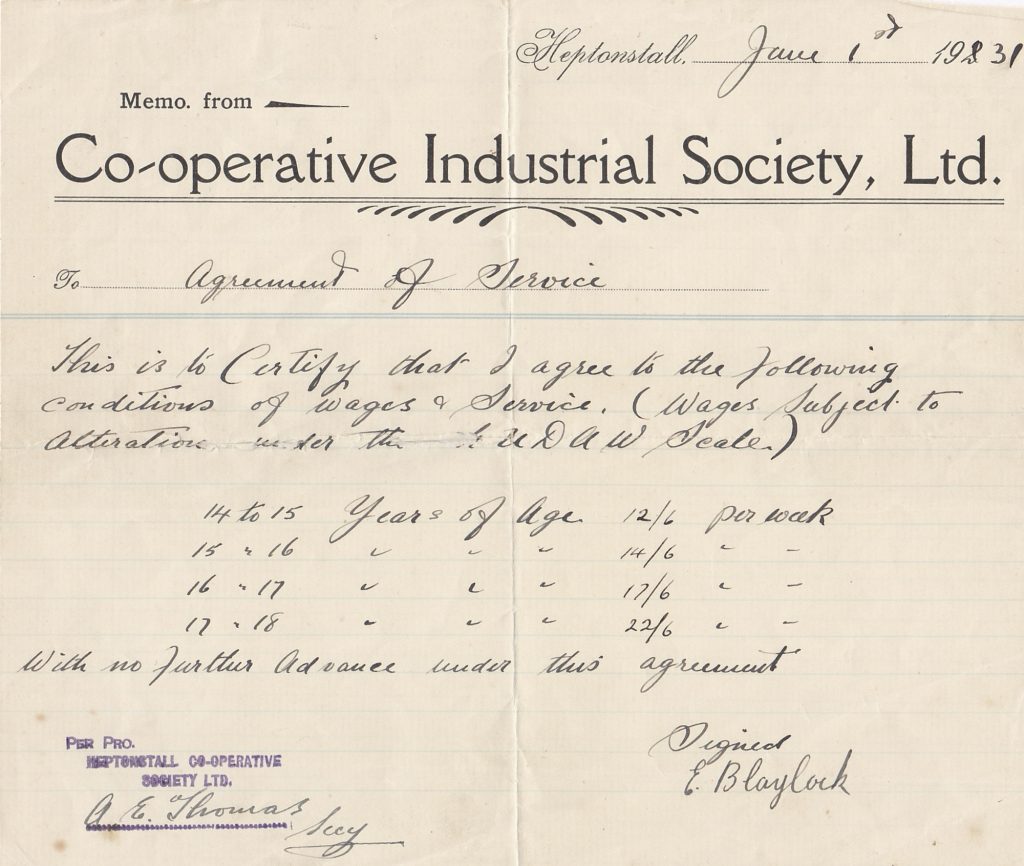
The second of five sons, William left school at 14 and got a job at the Co-op. Because of his young age, his father had to sign the agreement of service, detailing how much his son would be paid each year between 14 and 18. Edith worked as a machinist in a local textile factory.
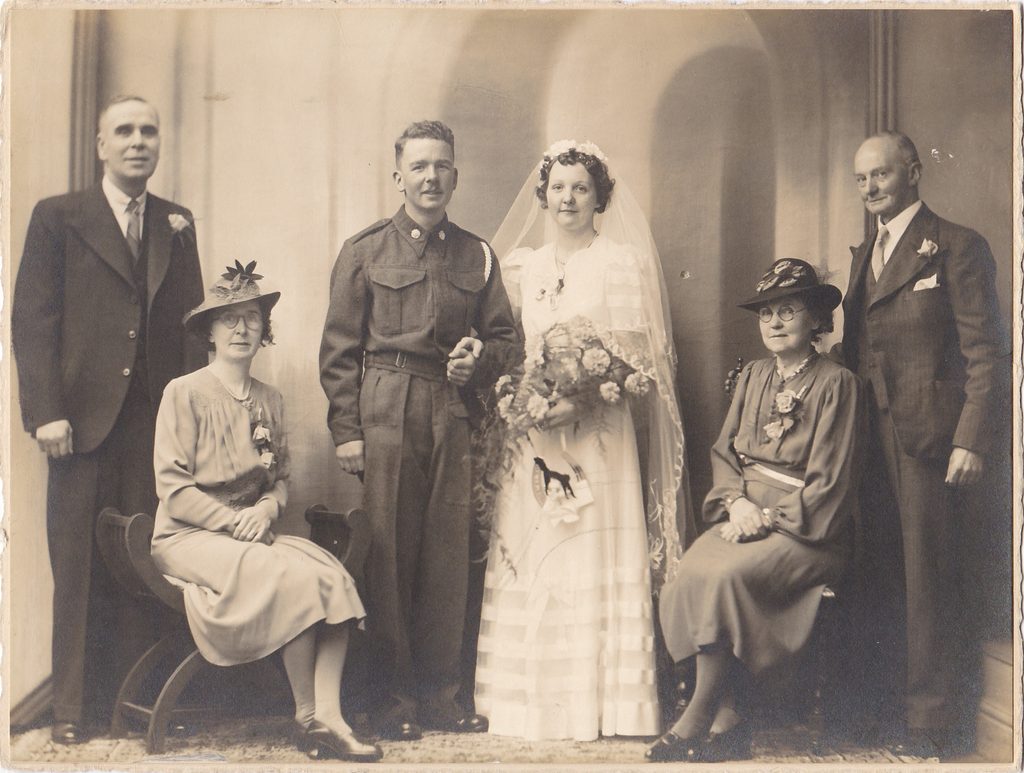
William married Edith at the Methodist Chapel on 16 November 1940. Like many young couples, theirs was arranged to coincide with William’s leave. The groom was pictured wearing his uniform. With food rationing introduced in January 1940, their friends and families would have pooled resources for their reception in the Upper Room of Heptonstall Coop.
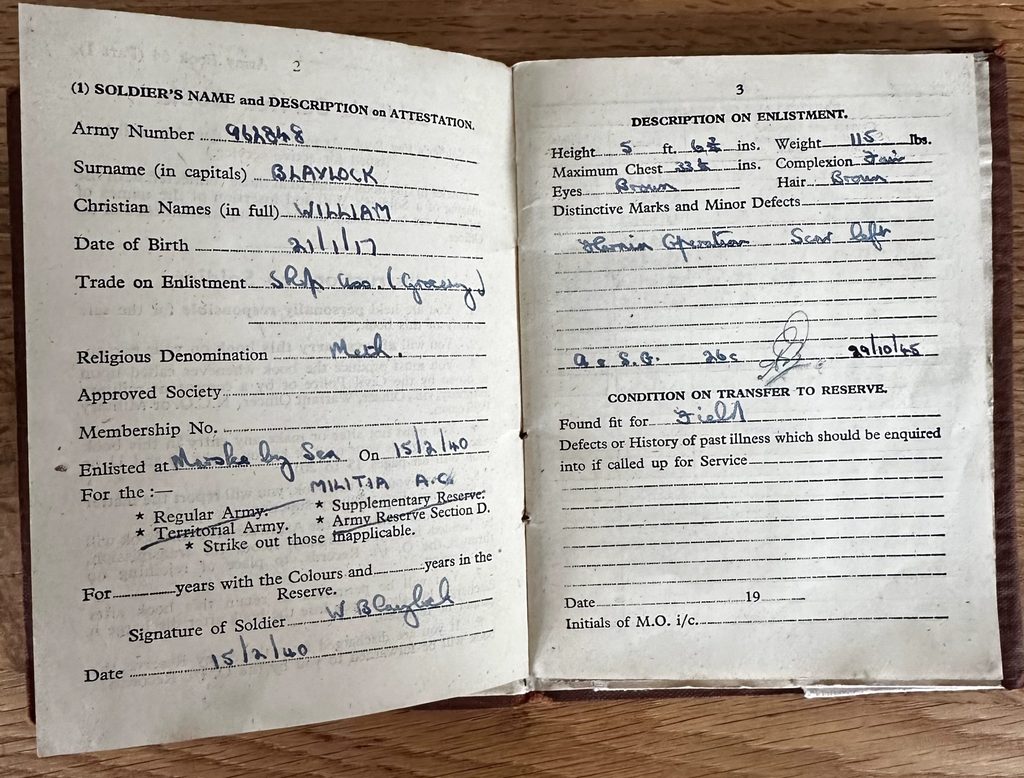
On the first day of war, Parliament passed the National Service (Armed Forces) Act. Call-up papers were sent out in age bands. William probably received his papers in October 1939 along with other men aged 20 to 23. He enlisted and received his basic training as a gunner with the Royal Artillery at the former Marske Aerodrome in North Yorkshire.
The war years must have been anxious times for William’s parents as four of their sons saw active service. Sadly, their eldest son, Stanley, never returned home.
Stanley’s Story
After joining up in June 1940, Stanley was first sent overseas in March 1941, seeing active service in North Africa, Egypt, Libya, Palestine, Syria, Ceylon (now known as Sri Lanka) and India.
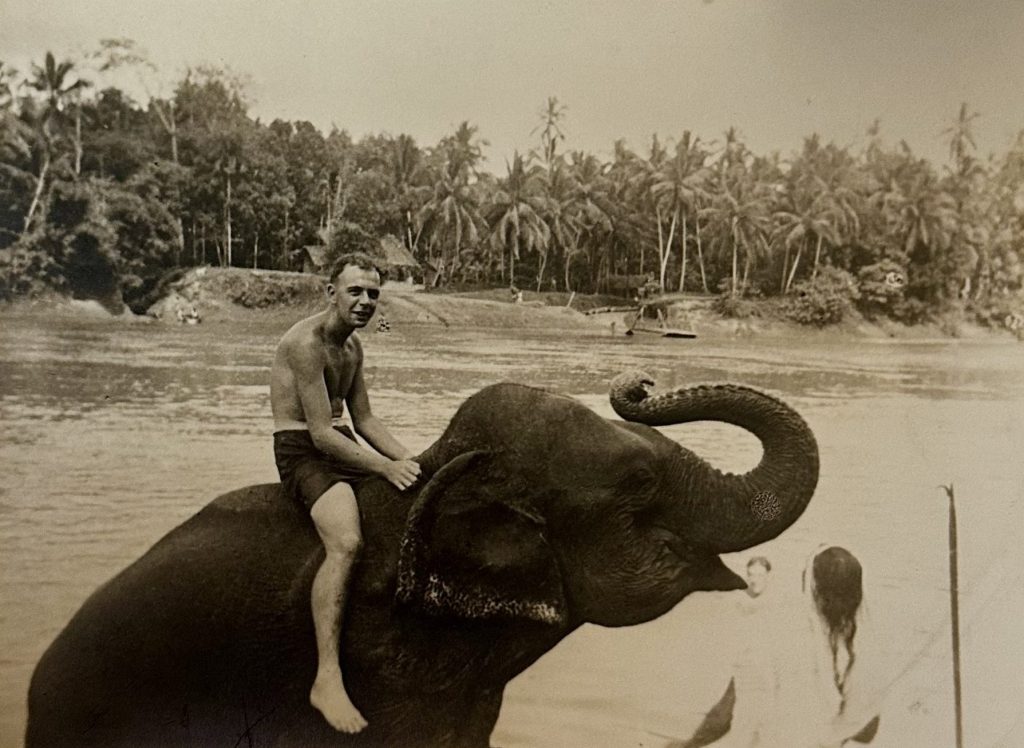
In 1944, Stanley was due to come home on leave, but was called to his commanding officer, who told him he was being seconded to the ‘Chindits’, the SAS of the day, who dropped him behind enemy lines in Burma (modern-day Myanmar). During his brief time there, he was pictured astride an elephant.
Stanley and five others were ambushed by the Japanese and killed in action on 27 March 1944, aged 29.
His body was never recovered.
Stanley is commemorated at the Rangoon Cemetery, Myanmar, and visitors can see a marble memorial plaque on the wall of Heptonstall Methodist Chapel.
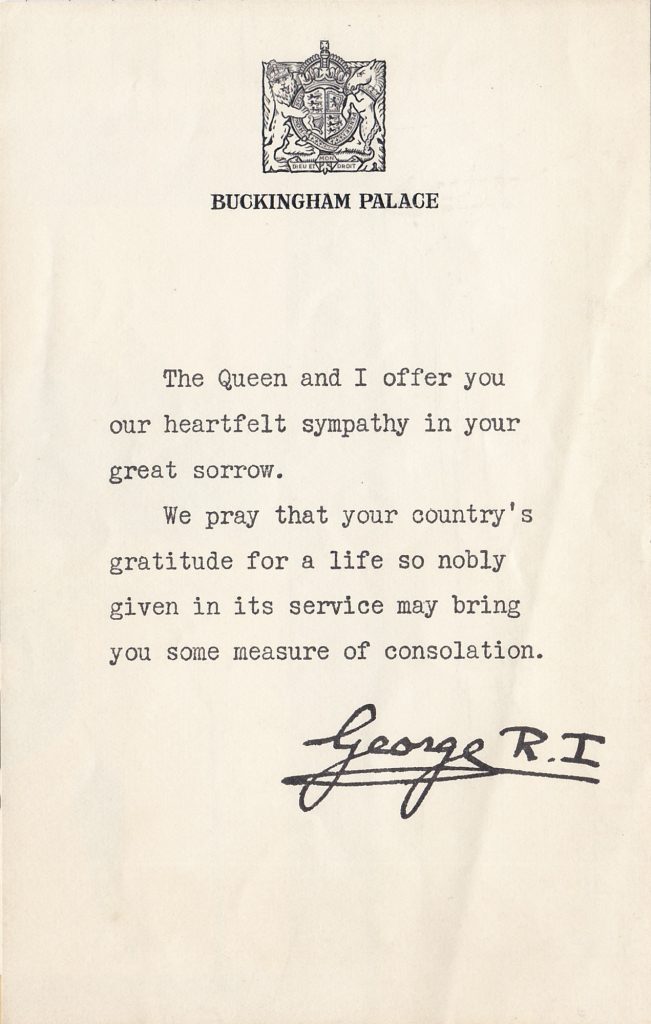
His grieving parents received a heartfelt message of condolence from King George VI and Queen Elizabeth.
William’s Story
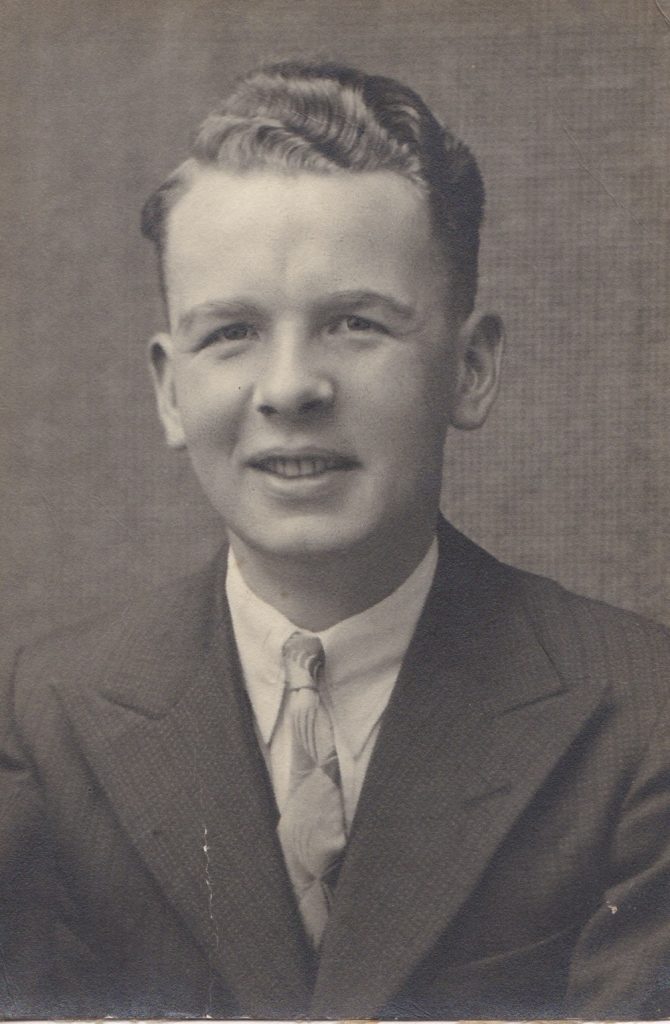
Born 29 January 1917
Regarded as an intelligent officer with a ‘great sense of duty,’ William was commended for his exemplary wartime service, seeing active service in France and Germany. In January 1946, after the end of the war, he was still serving with the British Army of the Rhine in Rendsberg.
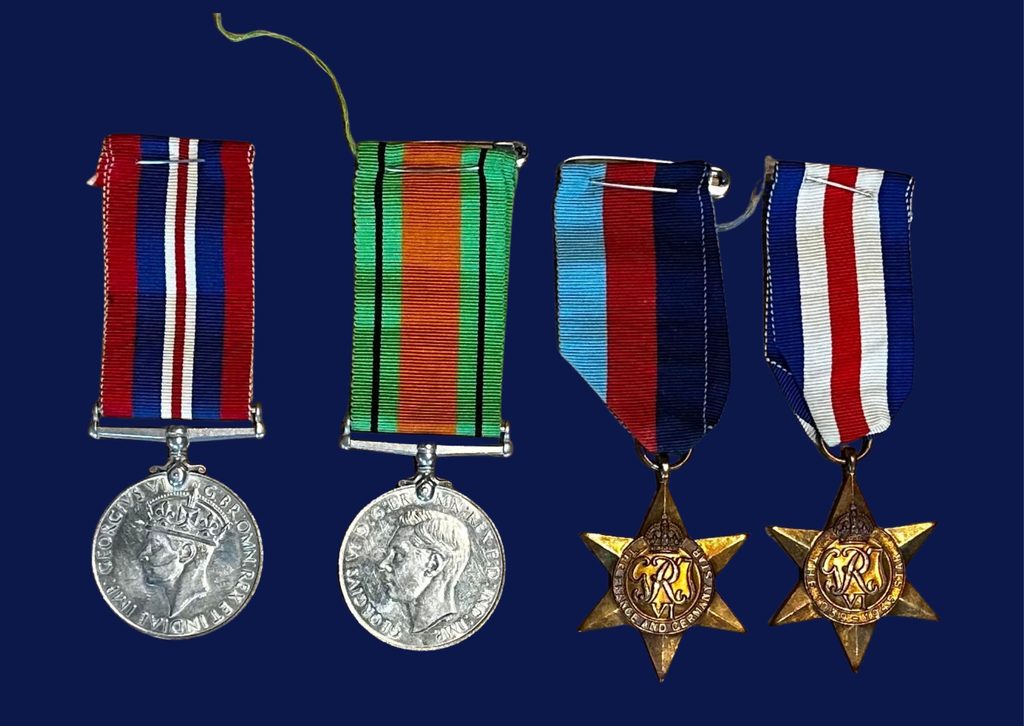
William’s medals have been proudly preserved through the next generation of the family and we are very proud to have them on loan for the current exhibition.
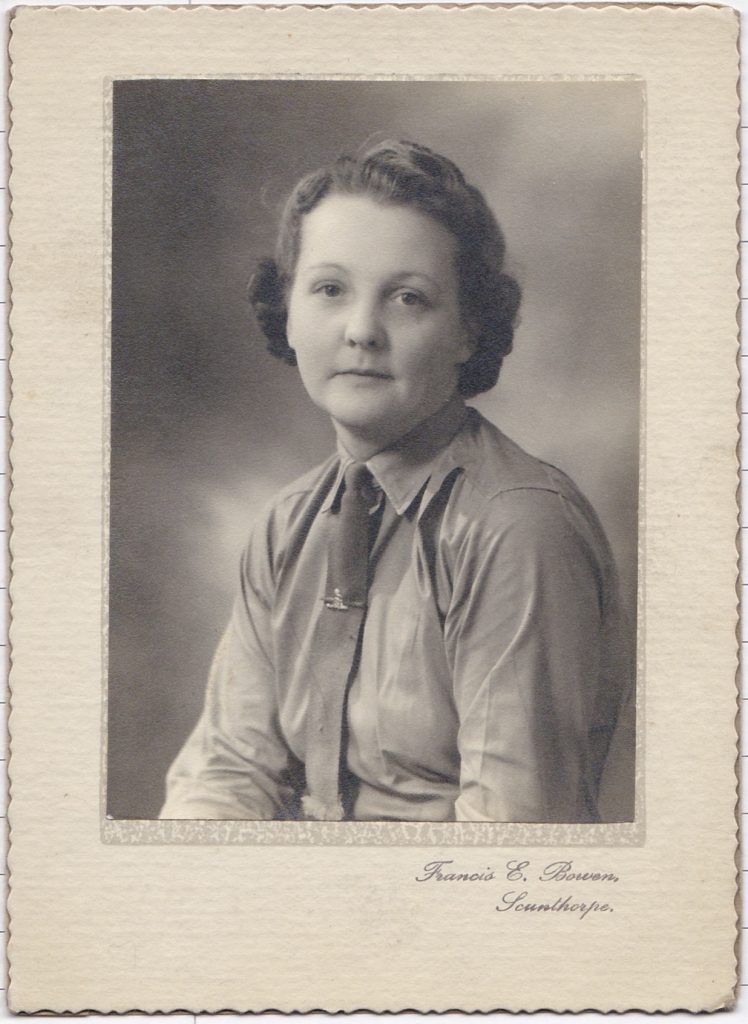
Edith
Important documents kept by the Blaylocks
Heptonstall Museum are honoured to have the original service records and numerous family items belonging to the Blaylock family, including every day items such as their ‘Ration Books’ for food and clothing. It gives us such a personal insight into the daily lives of those living through such difficult times.
The Ministry of Food oversaw rationing. Every man, woman and child was given a ration book with coupons. Bacon and ham were rationed to 4 ounces a week (less than 100 grams), sugar to 12 ounces and butter to 4 ounces. Long queues became commonplace. The government encouraged the growing of vegetables in gardens, public parks and allotments through its ‘Dig for Victory’ scheme.
In 1941, one of the reasons given for establishing a British Restaurant in the former Church School building was to reduce waste of rationed food.
Clothes rationing was introduced in January 1941 to save raw materials and factory labour for military uniforms. Everyone received an annual allowance of 66 coupons, later dropping to 48. Items of clothing had a point value based on how much fabric and labour they took to make. A man’s shirt cost 8 coupons, and a pair of stockings cost 2 coupons. The government launched a ‘make do and mend’ campaign to encourage the darning, patching and recycling of fabric and wool.