Heptonstall has inspired poets for generations. Atmospheric and surrounded by such inspiring scenery and a history that is evident in every building, brick and cobblestone.
Heptonstall Museum has hosted many events celebrating poetry since reopening, welcoming readings and workshops celebrating the work of Ted Hughes and Sylvia Plath and welcoming many contemporary poets such as Sally Baker, Sarah Corbett, Michael Crowley, Sammy Weaver, Victoria Gatehouse, Ian Humphreys, and others — many of whom draw on the Pennine landscape in their work.
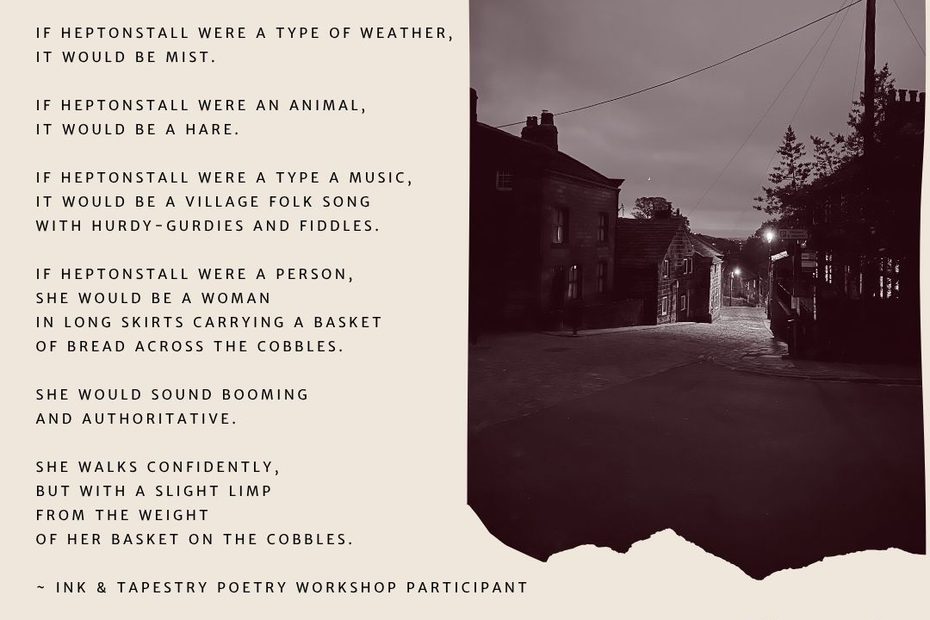
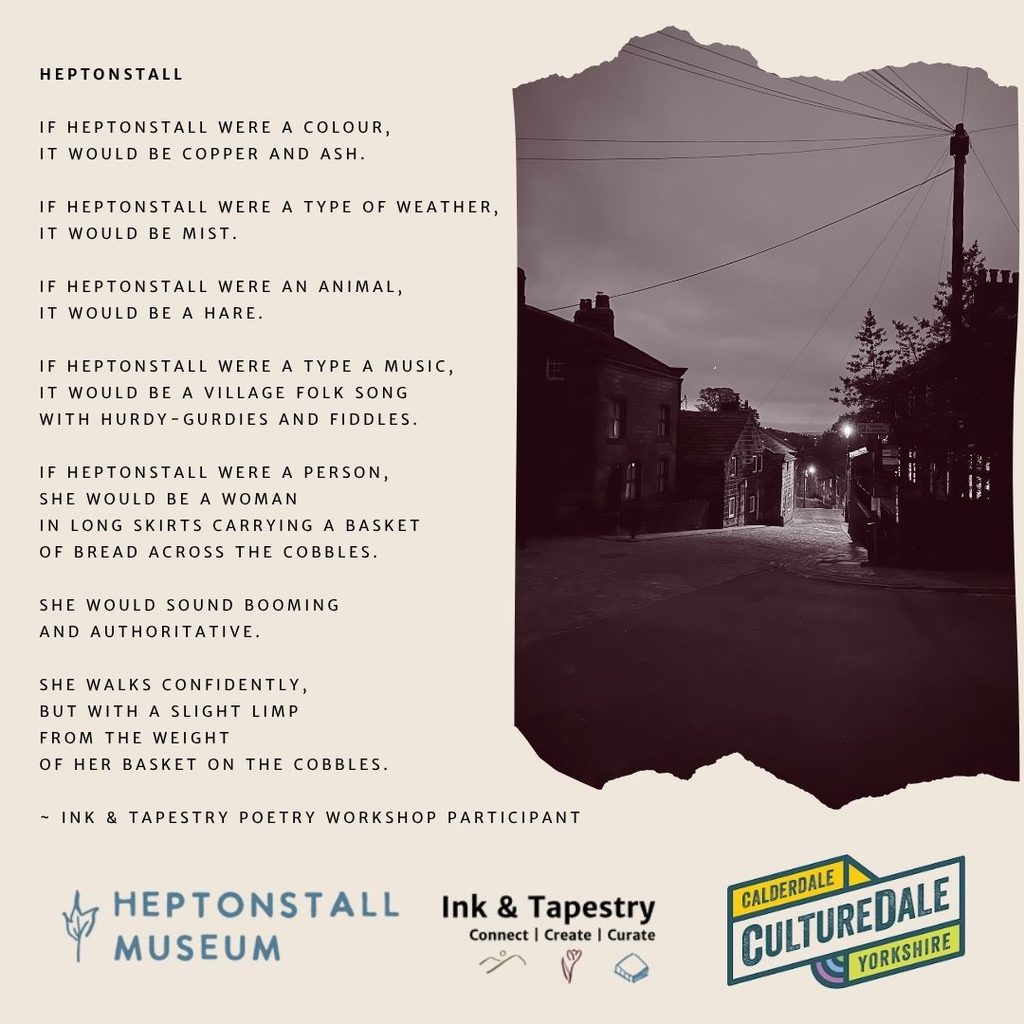
In 2025 year we held a series of workshops, including a poetry workshop with Sammy Weaver and with help from Calderdale Council’s “Culturedale” programme. Michael Crowley, created a soundscape, which includes his own poetry relating to the Battle of Heptonstall and incorporating our woven poem here.
Enjoy creating your own poetry and if you wish to share with us, we’d love to hear from you
Heptonstall’s most famous poetic associations begin with Sylvia Plath, whose grave in the old churchyard draws visitors from around the world. Her presence has inspired many later poets, including Alan S. Jeeves, whose poem The Poetess of Heptonstall reflects on the churchyard’s quiet drama and Plath’s legacy.
Of course, Sylvia’s finally resting place was chosen by her husband, the former Poet Laureate, Ted Hughes. He and his family lived locally and Ted’s poetry often incorporated local landmarks and he wrote “Heptonstall”, published in 1979.
(Our museum bookshop regularly stocks a small range of books, including “Remains In Elmet” which contains this evocative poem. )
Another poet connected to the village is Asa Benveniste, the New York–born writer and publisher who chose Heptonstall as his final resting place. Roy Fisher’s elegy At the Grave of Asa Benveniste captures the atmosphere of the churchyard and the community of poets who gathered around him. The poem is available to read on the Poetry Archive: “At the Grave of Asa Benveniste” (Roy Fisher).
National Poetry Day, Heptonstall offers a powerful reminder of how poetry grows from place: from moorland winds, stone-built streets, and the layered histories of those who lived, wrote, and are remembered here.
School resources: https://literacytrust.org.uk/resources/national-poetry-day-resources/
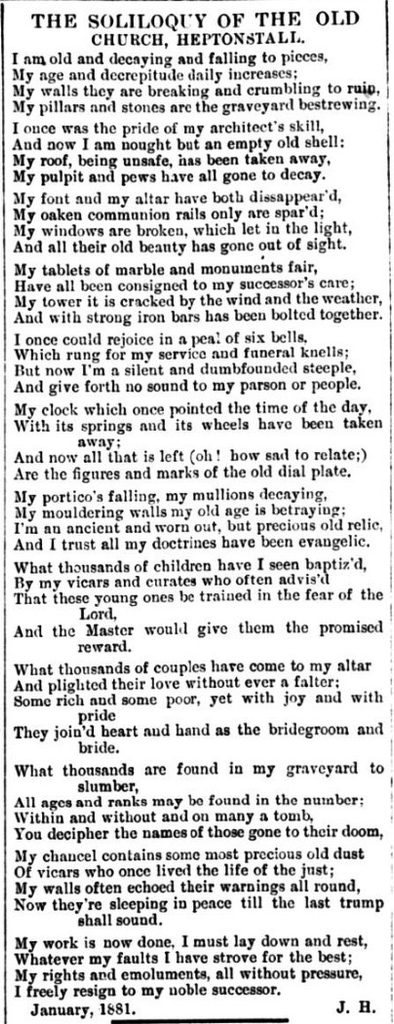
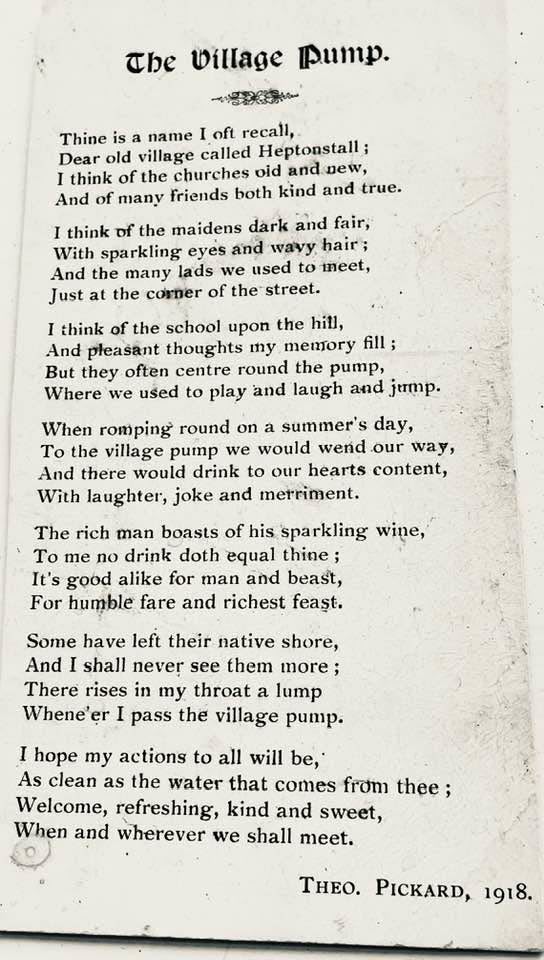
Poems relating to Heptonstall:
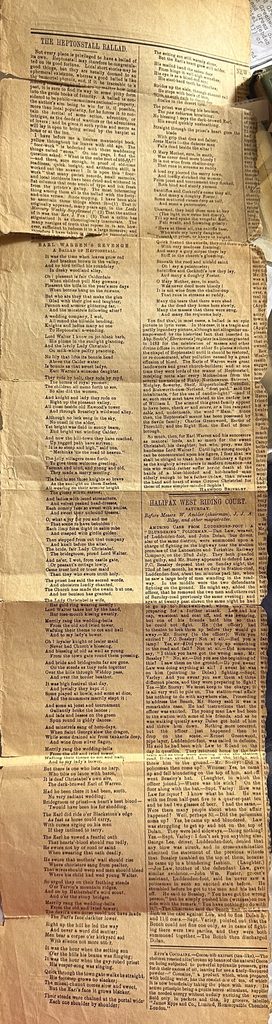
The Heptonstall Ballad as it appeared in the local newspaper in 1894. Read the full news article and ballad here.
It is discussed on John Billingsley’s 2011 Hood Head & Hag: Folk Tales from Calderdale Vol.2.
It may or may not relate to the ‘effusion of blood’ which is referenced in church records in the registers of the Archbishop of York. Heptonstall’s church and its surrounding churchyard were temporarily closed for 24 days in December 1482 so they could be ritually cleansed after being “polluted by an effusion of blood”. To accommodate the community during the closure, a special dispensation was granted on September 20, 1482, allowing parishioners to hold their own weddings, funerals, and Christmas celebrations at home. Where poetry combines with folklore the truth may be blurred – John’s book covers this along with other Calderdale folklore!